Chronolith
Stone measures time.
Light marks duration.
Human presence leaves no trace.
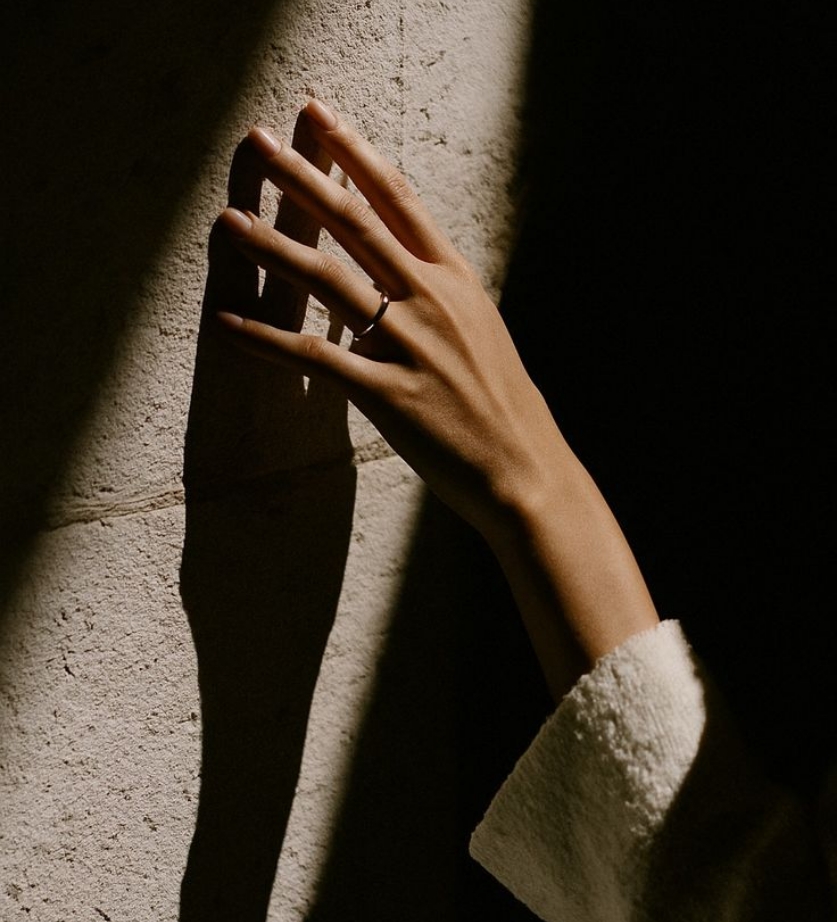
Chronolith is an architectural installation that frames three elemental forces:
the slow formation of matter, the arc of the sun, and the fleeting passage of human life within built space.
Malta is an island sculpted from its own ancient bedrock. For millennia, Maltese architects, farmers, and builders have extracted, cut, and stacked the same soft golden limestone, franka and soll, shaping temples, watchtowers, farmhouses, and city walls from the very material beneath their feet.
The stone remembers. It holds the tool marks of hands long gone. It weathers slowly, honestly, acquiring texture and depth with each passing century.
In Malta, to build in stone is not a stylistic choice. It is an act of continuity.
Malta is stone.
Stone is memory, and
memory is all that remains.
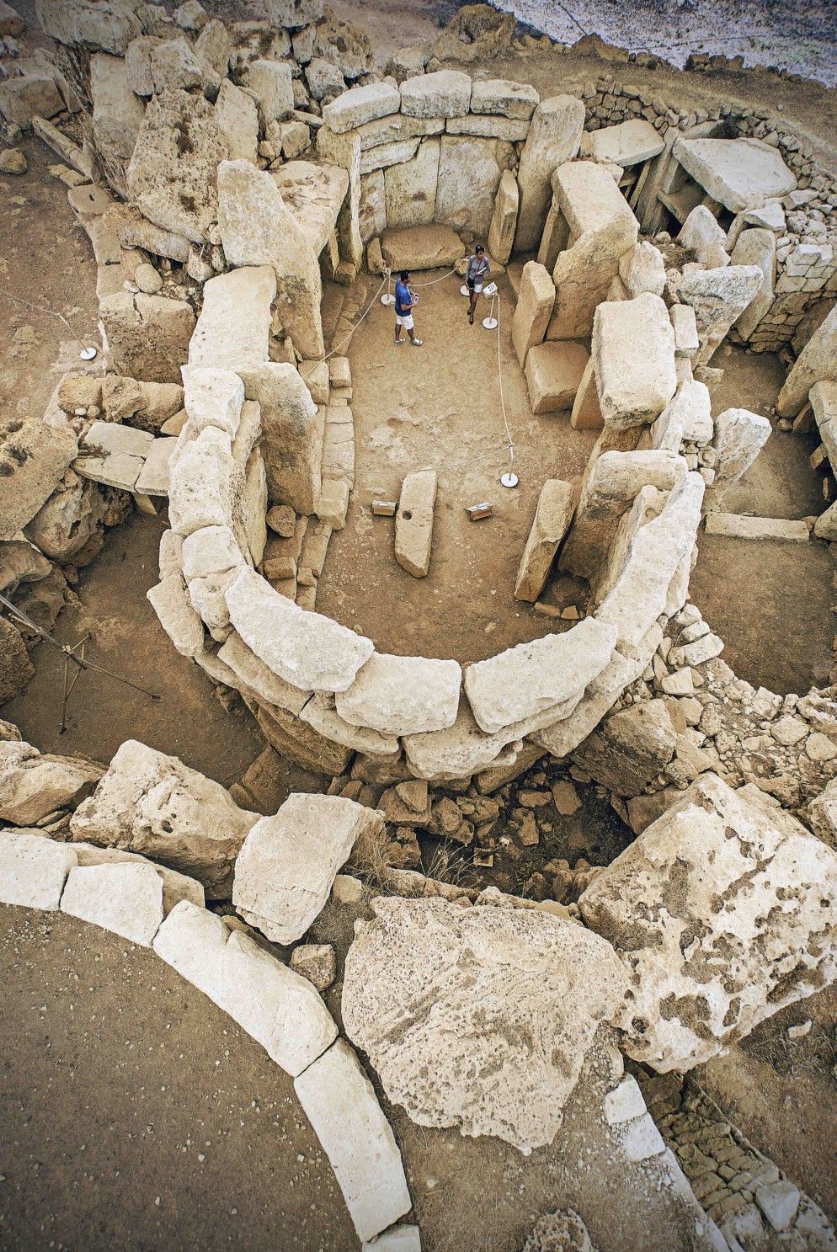
Drawing inspiration from the Megalithic Temples of Malta, standing among the oldest freestanding structures on Earth, built not merely as shelter but as instruments of solar alignment.
Ħaġar Qim and Mnajdra are stones arranged so that, at the solstice, light enters precisely, intentionally, to mark the turning of a year. Five thousand years before the clock, time was read through architecture. Stone was the sundial.
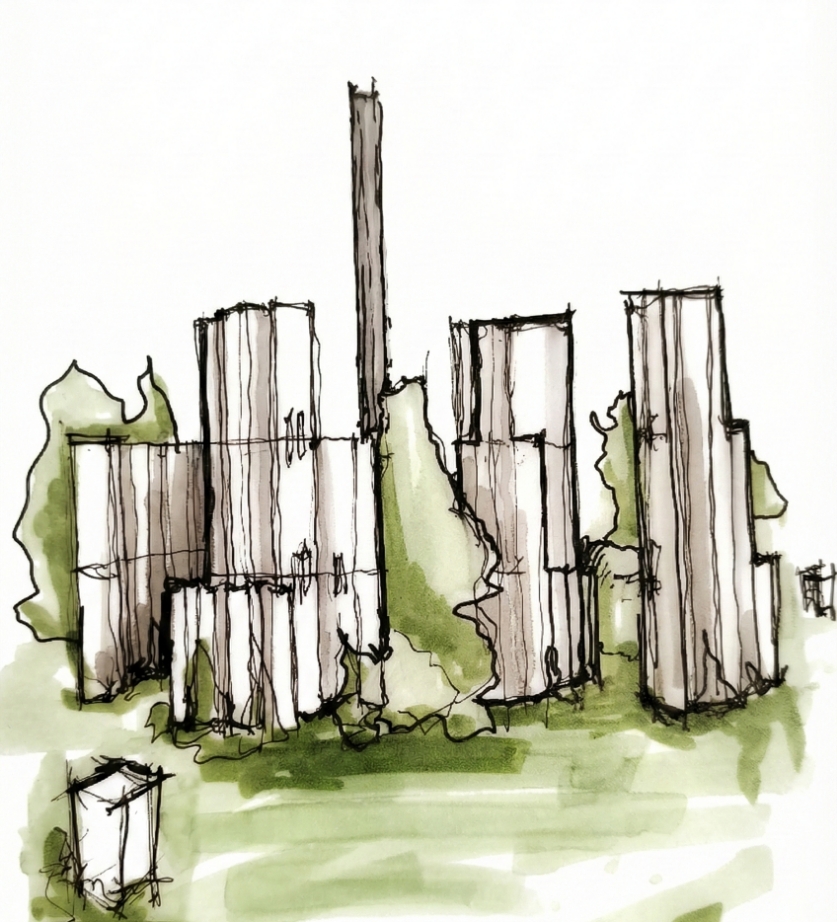
Chronolith returns to that logic. Reconstituted Maltese limestone, circular and low-impact, the pavilion is inscribed as a sundial. A central pole casts a shadow that moves across the interior throughout the day. Not as spectacle, but as quiet observation. Time here is not
counted. It is perceived.
In an era defined by acceleration and distraction, Chronolith poses a simpler, more urgent question: what does it mean to build in stone today, and what does the stone, in return, ask of us?
Interni Design Week 2026
“Materiae”
Chronolith was commissioned and presented within Materiae, the 2026 theme of Interni Magazine’s Design Week programme at the Università degli Studi di Milano, one of the most prestigious platforms for experimental design and material research in Europe.
Among the names shortlisted to exhibit and take the stage, Chronolith stood out as one of the event’s main highlights, shown at an exhibition that drew over 400,000 visitors. Materiae called for a multidisciplinary exploration of how materials, ideas, and disciplines intertwine to generate sustainable, high-impact design solutions.
Chronolith did not respond with an explanation, but rather with an experience.
This is where sustainability made spatial, material intelligence made tactile, and time made visible through form, shadow, and stone.
The installation was entirely conceived, designed, and realised by Maltese talent, the result of genuine collaboration between designers, engineers, lighting specialists, and logistics partners, all based in Malta, placing Maltese craft and innovation confidently on the international stage.
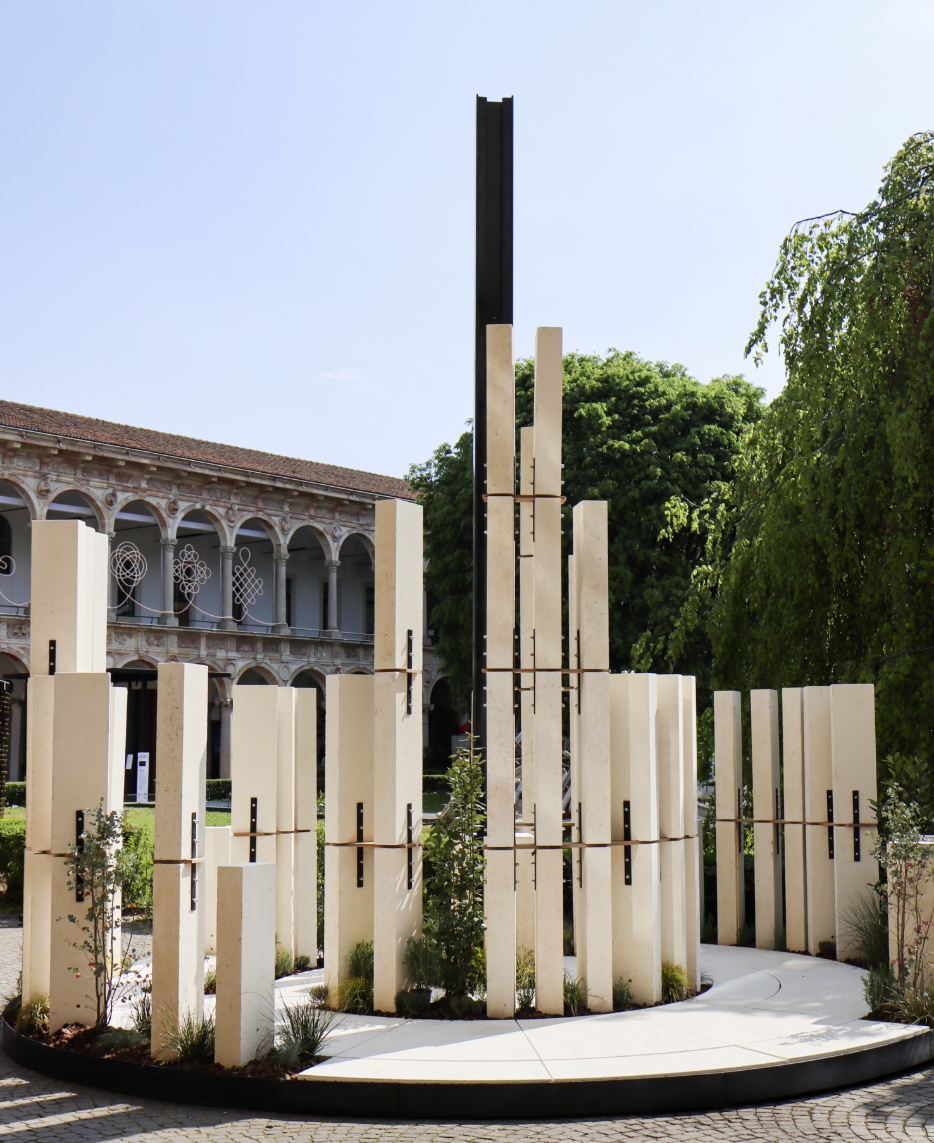
To enter Chronolith is to enter a different relationship with time. The circular form has no front, no back, no preferred direction, the visitor is immediately disoriented from the linear logic of everyday space.
At the centre, a single pole casts a shadow that moves with the patience of something geological. The walls of reconstituted limestone absorb and return the light differently as the hours pass, warmer at midday, cooler at dusk, so that the stone itself becomes a kind of clock face, read not with numbers but with the body.
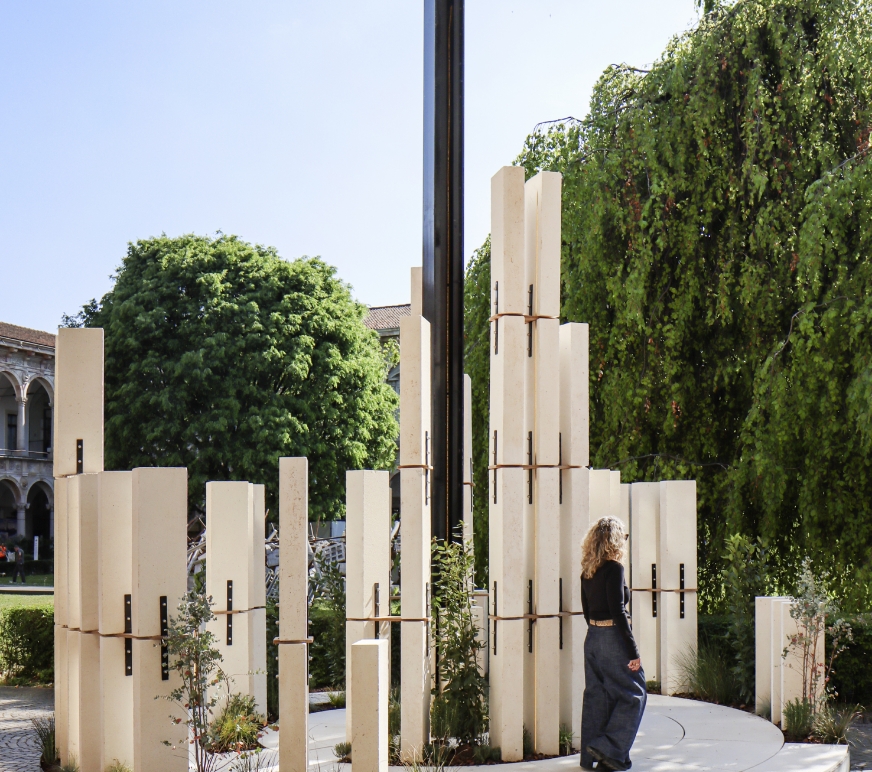
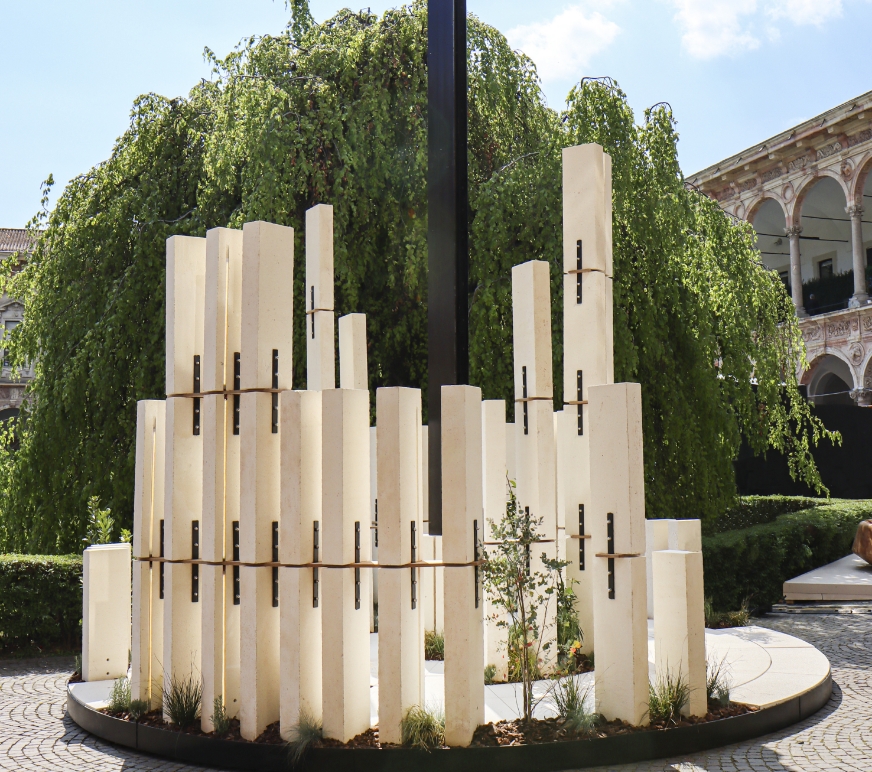
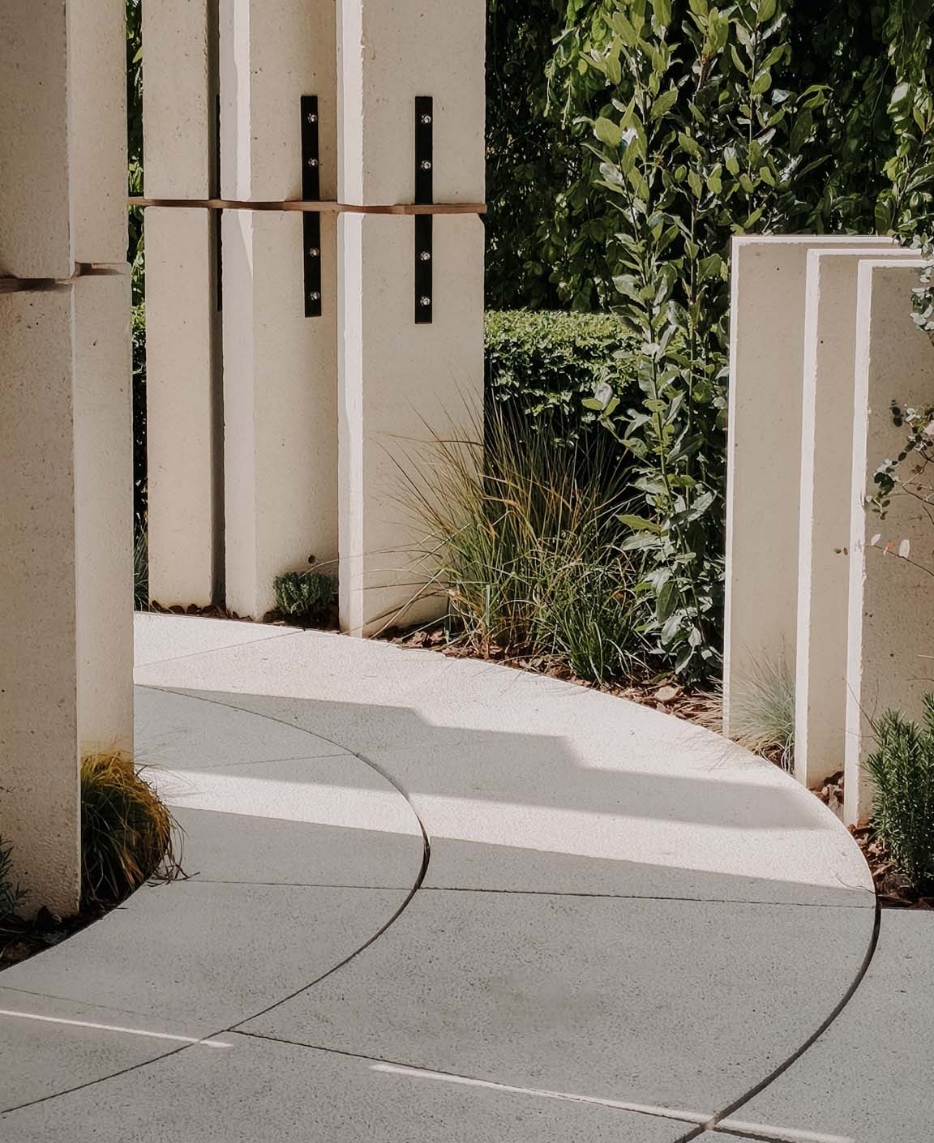
Visitors are enveloped by stone and sound, entering not a room, but a thickness.
The walls receive light and shadow as a surface receives touch. Architecture becomes both container and register, recording the passage of time through continuous, almost imperceptible transformation.
From geological memory
to architectural form.
The design process for Chronolith began with a question about material honesty: what is reconstituted stone, and what can it truthfully become?
Recobel by Halmann Vella’s material, circular, low-impact, technically advanced, became the conceptual foundation.
The pavilion’s circular form evolved from the logic of the sundial; a structure that requires no digital mediation, no screen, no instruction. Only the sun, the shadow, and the body of the visitor.
Structural engineering by Made Studio resolved the challenge of a temporary installation designed to feel permanent. Lighting design by Altern ensured that the nocturnal presence of the installation extended its temporal narrative beyond daylight hours.

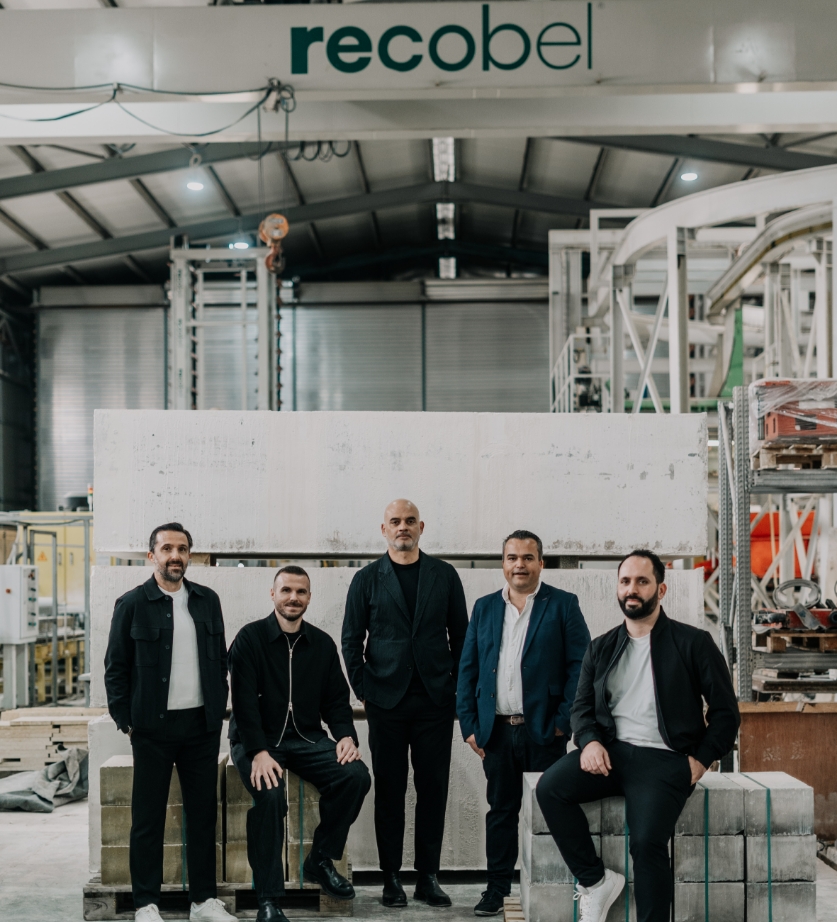
The Team
behind Chronolith
Chronolith was created through genuine collaboration between designers, engineers, lighting specialists, and logistics partners, all based in Malta.
At the heart of the DAAA Artz Collective are its architects of thought namely, Keith Pillow, Hugh Vella, Frank Ellul, Josef Caruana, Daniel Cassar, and Matthew Spiteri, whose
collective minds weaved art and architecture into a single tapestry named Chronolith.